The Best Books on Grammar and Punctuation for Writers in the US
American English grammar is so incredibly frustrating and complicated! Everyone could use a little help making sense of it all!
This article offers a list of the best books on grammar. The curated recommendations come from my perspective as an experienced nonfiction editor and publishing coach. I specialize in self-help; dating and relationships; health and wellness; US history; biography; politics; sports; and pop culture books, among other genres.
The Best Books on Grammar (for American English)
Below are my top eight picks—with book details, star ratings, and book descriptions below.
Each of these “best books on grammar” are available on Amazon; most are available in multiple formats, new and used.
Whether you’re a writer or author looking to sharpen your craft, a freelancer looking to build your arsenal, or a teacher or professor looking to help your students up their game, these books will arm you for success.
🏆Best books on grammar

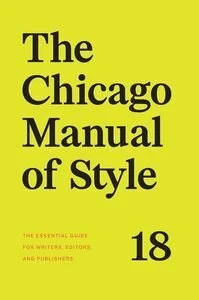
The Chicago Manual of Style, 18th edition by University of Chicago Press Editorial Staff
(University of Chicago Press, 2024, 1,150 pages, 4.8⭐)
The definitive style guide for editors, covering everything from grammar to citation formats. More than 1.75 million copies sold.
“Every chapter has been reexamined with diversity and accessibility in mind, and major changes include updated and expanded coverage of pronoun use and inclusive language, revised guidelines on capitalization, a broader range of examples, new coverage of Indigenous languages, and expanded advice on making publications accessible to people with disabilities. The Manual’s traditional focus on nonfiction has been expanded to include fiction and other creative genres in coverage of topics such as punctuation and dialogue, and the needs of self-published authors receive wider attention.
“As with every new edition, devotees of the Manual will find much to discover and ponder.”
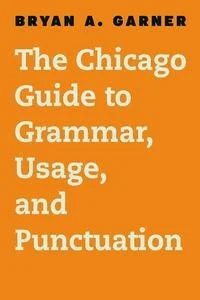
The Chicago Guide to Grammar, Usage, and Punctuation by Bryan A. Garner
(University of Chicago Press, 2016, 200 pages, 4.7⭐)
Practical advice for copyeditors on balancing professionalism with flexibility and maintaining good relationships with authors.
“Few people can write on the English language with the authority of Bryan A. Garner. The author of The Chicago Manual of Style’s popular “Grammar and Usage” chapter, Garner explains the vagaries of English with absolute precision and utmost clarity. With The Chicago Guide to Grammar, Usage, and Punctuation, he has written the definitive guide for writers who want their prose to be both memorable and correct.
”Throughout the book Garner describes standard literary English—the forms that mark writers and speakers as educated users of the language. He also offers historical context for understanding the development of these forms. The section on grammar explains how the canonical parts of speech came to be identified, while the section on syntax covers the nuances of sentence patterns as well as both traditional sentence diagramming and transformational grammar. The usage section provides an unprecedented trove of empirical evidence in the form of Google Ngrams, diagrams that illustrate the changing prevalence of specific terms over decades and even centuries of English literature. Garner also treats punctuation and word formation, and concludes the book with an exhaustive glossary of grammatical terms and a bibliography of suggested further reading and references.”
“The Chicago Guide to Grammar, Usage, and Punctuation is a magisterial work, the culmination of Garner’s lifelong study of the English language. The result is a landmark resource that will offer clear guidelines to students, writers, and editors alike.”
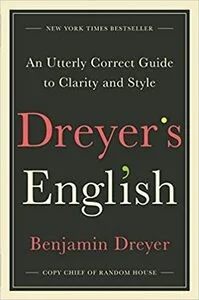
Dreyer’s English: An Utterly Correct Guide to Clarity and Style by Benjamin Dreyer
(Random House, 2019, 320 pages, 4.7⭐)
A sharp, funny grammar guide they’ll actually want to read, from Random House’s longtime copy chief and one of Twitter’s leading language gurus.
“We all write, all the time: books, blogs, emails. Lots and lots of emails. And we all want to write better. Benjamin Dreyer is here to help.
“As Random House’s copy chief, Dreyer has upheld the standards of the legendary publisher for more than two decades. He is beloved by authors and editors alike—not to mention his followers on social media—for deconstructing the English language with playful erudition. Now he distills everything he has learned from the myriad books he has copyedited and overseen into a useful guide not just for writers but for everyone who wants to put their best prose foot forward.
”As authoritative as it is amusing, Dreyer’s English offers lessons on punctuation, from the underloved semicolon to the enigmatic en dash; the rules and nonrules of grammar, including why it’s OK to begin a sentence with “And” or “But” and to confidently split an infinitive; and why it’s best to avoid the doldrums of the Wan Intensifiers and Throat Clearers, including “very,” “rather,” “of course,” and the dreaded “actually.” Dreyer will let you know whether “alright” is all right (sometimes) and even help you brush up on your spelling—though, as he notes, “The problem with mnemonic devices is that I can never remember them.”
”And yes: ‘Only godless savages eschew the series comma.’”
”Chockful of advice, insider wisdom, and fun facts, this book will prove to be invaluable to everyone who wants to shore up their writing skills, mandatory for people who spend their time editing and shaping other people’s prose, and—perhaps best of all—an utter treat for anyone who simply revels in language.”

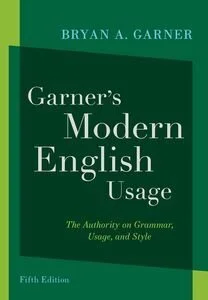
Garner’s Modern English Usage, Fifth Edition by Bryan A. Garner
(Oxford University Press, 2022, 1,312 pages, 4.6⭐)
A detailed reference for writers, editors, and speakers on modern English usage and style.
“One of the most influential style guides ever written for the English language. After four previous editions and over twenty years, our language has evolved in many ways, and the powerful tool of big data has revolutionized lexicography. This extensively revised new edition fully captures these changes, featuring a thousand new entries and over two hundred replacement entries, thoroughly updated usage data and ratios on word frequency based on the Google Ngram Viewer, a more balanced coverage of World Englishes, not just American and British, and the inclusion of gender-neutral language.
“A masterpiece of lexicography written with wit and personality by one of the preeminent authorities on the English language.
“Garner explains the nuances of grammar and vocabulary and the linguistic blunders to which modern writers and speakers are prone, whether in word choice, syntax, phrasing, punctuation, or pronunciation.”
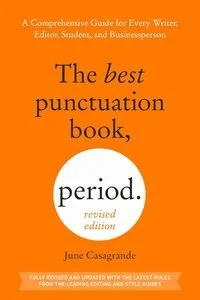
The Best Punctuation Book, Period, Revised Edition: A Comprehensive Guide for Every Writer, Editor, Student, and Businessperson by June Casagrande
(Ten Speed Press, 2026, 256 pages, 4.8⭐)
“This newly revised and updated all-in-one grammar reference is a quick and easy way to look up sticky punctuation questions for all style manuals including AP (Associated Press), MLA (Modern Language Association), APA (American Psychological Association), and Chicago Manual of Style.
“These days, writers wear many different hats: they write college essays, magazine and news articles, sales copy, online newsletters, books, and reports. It's hard to keep the punctuation style rules for each one straight--until now. This comprehensive reference from grammar guru June Casagrande is organized by punctuation type to give writers quick answers no matter what style of project they're drafting.
“The Best Punctuation Book, Period, Revised Edition provides clear, up-to-date answers to common questions about hyphenation, commas, apostrophes, numbers, and more; a Punctuation A to Z section addressing frequently confused terms in one master list; handy visual markers for usage rules; and rulings from an expert Punctuation Panel on gray areas. With this uniquely comprehensive resource in hand, writers will be able to craft polished prose in a flash.”
*The star rating refers to the previous edition.
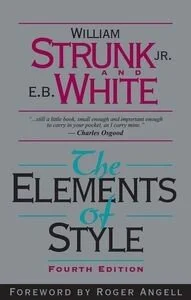
The Elements of Style, Fourth Edition by William Strunk Jr. and E. B. White
(Pearson, 1999, 346 pages, 4.6⭐)
Rules that sharpen prose and quiet the clutter.
“You know the authors’ names. You recognize the title. You’ve probably used this book yourself. This is The Elements of Style, the classic style manual, now in a fourth edition.
“A new Foreword by Roger Angell reminds readers that the advice of Strunk & White is as valuable today as when it was first offered. This book’s unique tone, wit and charm have conveyed the principles of English style to millions of readers. Use the fourth edition of ‘the little book’ to make a big impact with writing.”
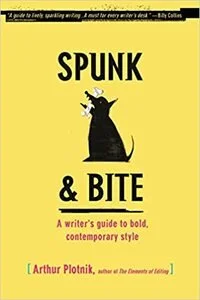
Spunk and Bite: A Writer’s Guide to Bold, Contemporary Style by Arthur Plotnik
(Diversified Publishing, 2007, 288 pages, 4.3⭐)
A hilarious guide to punchy and concise writing.
“Today's writer needs more than just a solid knowledge of usage and composition to write successfully. Bestselling author Arthur Plotnik reveals the secrets to attention-grabbing, unforgettable writing, in this trade paperback edition.
“Updated with all-new writing exercises, Spunk & Bite will help writers take books, articles, business reports, memos, and even social-media posts to the next level.”
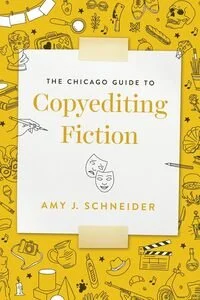
The Chicago Guide to Copyediting Fiction by Amy J. Schneider
(University of Chicago Press, 2023, 235 pages, 4.9⭐)
A book-world veteran offers the first copyediting guide focused exclusively on fiction.
“Although The Chicago Manual of Style is widely used by writers and editors of all stripes, it is primarily concerned with nonfiction, a fact long lamented by the fiction community. In this long-awaited book from the publisher of the Manual, Amy J. Schneider, a veteran copyeditor who’s worked on bestsellers across a wide swath of genres, delivers a companionable editing guide geared specifically toward fiction copyeditors—the first book of its type.
“In a series of approachable thematic chapters, Schneider offers cogent advice on how to deal with dialogue, voice, grammar, conscious language, and other significant issues in fiction. She focuses on the copyediting tasks specific to fiction—such as tracking the details of fictional characters, places, and events to ensure continuity across the work—and provides a slew of sharp, practicable solutions drawn from her twenty-five years of experience working for publishers both large and small. The Chicago Guide to Copyediting Fiction is sure to prove an indispensable companion to The Chicago Manual of Style and a versatile tool for copyeditors working in the multifaceted landscape of contemporary fiction.”
Ready to work with an experienced nonfiction editor?
Whether you need help with the big-picture structure and organization of your book or your manuscript needs a polish of its grammar, capitalization, and punctuation—and all things in between, I got you!
Over 95+ books and 12+ million words edited. Working with US authors in select genres.
Discover the difference a great nonfiction editor makes. Get started today!
For writers and authors of fiction and nonfiction, freelance editors (copy editors, line editors, and proofreaders), professors and teachers, the titles above will help you improve your grammar skills.
They are widely available from your online retailer or library of choice. Get your copy (or copies) today!
Best to you!