Tips for Hiring a Book Editor on Reedsy Marketplace
Finding the right editor on Reedsy is the difference between a manuscript that limps to the finish line and one that sprints onto the bookshelf.
This guide offers a practical checklist for reading profiles, evaluating samples, and hiring with confidence.
I’ll begin with a brief overview of how Reedsy works, then walk you through the process of requesting a quote from an editor. Next, I’ll share tips for hiring an editor on Reedsy Marketplace. I’ll end with a checklist for quick reference.
What is Reedsy Marketplace?
Reedsy Marketplace is an online platform that connects authors with vetted, professional publishing talent. It brings together freelancers with verified industry experience in a single searchable and browsable database.
Authors can send up to five briefs—requests for quotes—at a time. Freelancers may accept or decline, and authors choose whom they want to hire.
Reedsy emphasizes transparent workflows and provides a built‑in dashboard for messaging, file sharing, contracts, and payments, which streamlines collaboration and protects both parties.
How to request a quote on Reedsy
Start by visiting the Reedsy Marketplace and signing in or creating an account.
Select the service you need—Editing for this example. (Reedsy also offers services in Design, Publicity, Marketing, Translation, Ghostwriting, and Website Design.)
Use the Choose a service filter, the Genres dropdown, and the search bar to narrow your list of suitable professionals.
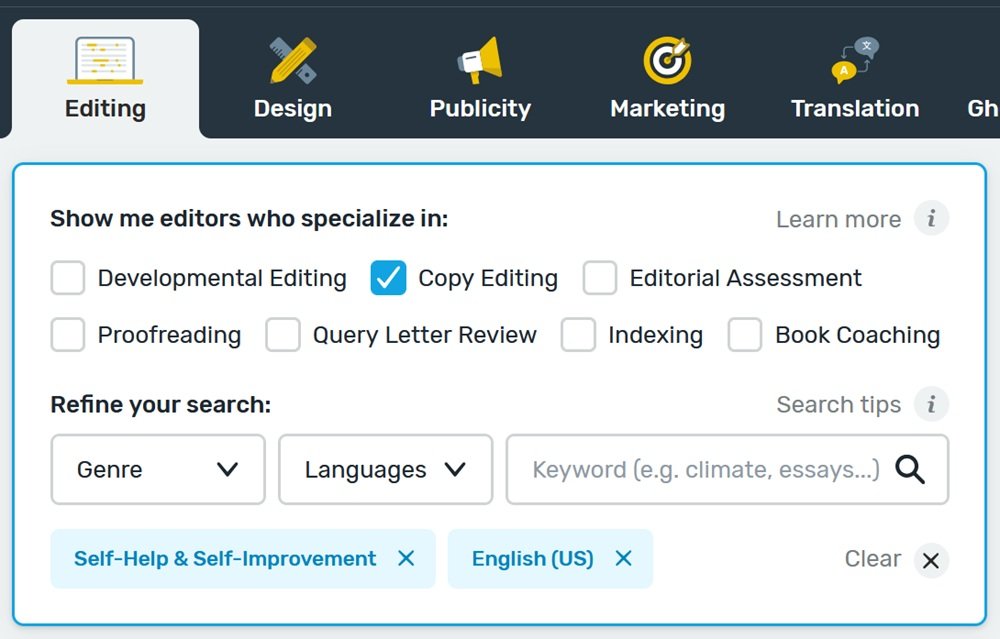
Browse Reedsy editor profiles and client testimonials, and shortlist up to five editors to contact.
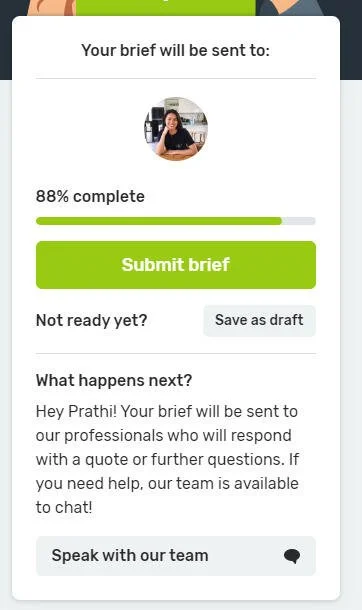
When you’re ready, click Request quotes to create and send your project brief. Include a clear overview of your book and describe what you need done. Indicate the current or expected word count. Upload a sample of your manuscript (typically the introduction and chapter one).
Your browser will automatically save a draft, or you can click Save as draft; Reedsy preserves unsubmitted author briefs for a week.
You can also save or organize lists of freelancers to contact later. Click Shortlists beneath the search bar, then Edit lists to create a custom shortlist. As you browse, click the star icon next to a professional’s bio to add them to any list you’ve created.
For a visual walk-through of the process, view the YouTube video on how to request an editing quote on Reedsy.
Once a professional responds, a red envelope icon will appear on that request. Click it to read their message or view their quote.
What to look for in Reedsy editor profiles
Here 8 things to look for when hiring a Reedsy editor.
1. Specialization
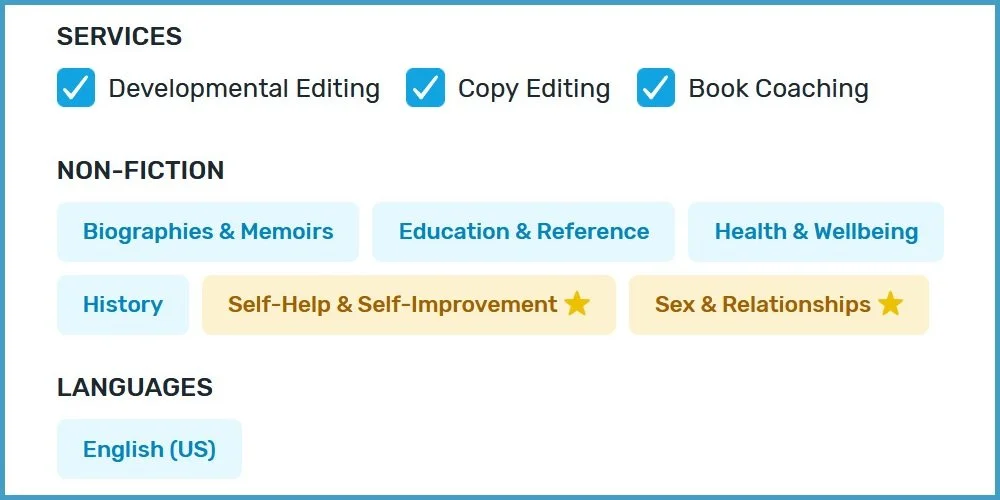
Each editor profile lists the services, genres, and languages they specialize in.
Prioritize editors who explicitly offer the service you need and who note that they work on the genre or subgenre you’re writing—Self‑Help, Business, Memoir, History, etc.—since subject familiarity affects the quality of the edit.
Also confirm the editor’s language specialization matches your publication goals. For example, a US author planning to self-publish on Amazon.com will usually want English (US) expertise.
You can review the Portfolio—a clickable gallery of titles the freelancer has worked on—but treat it cautiously. Portfolios aren’t comprehensive, may include work done outside Reedsy, and aren’t always up to date. Instead, ask the editor for the titles of their most similar or most successful projects to get a clearer sense of relevant experience.
To see my Reedsy profile, click on the image below.
2. Profile fit
A freelancer’s profile reveals a lot: It shows their experience, specializations, and often their working philosophy.
Consider whether the Reedsy professional’s focus and vibe match your needs. If they don’t, the freelancer may decline your request or may not be the best person to help.
A profile can also signal personality and demeanor. If you’re quirky and their profile reads quirky, that’s a good sign. If you prefer a no‑nonsense approach and their profile reads businesslike, that’s a match. If you want encouragement and their profile conveys warmth and empathy, that’s ideal. Ding, ding, ding!
Look for Reedsy professionals whose experience and personality match what you need.
3. Good reviews
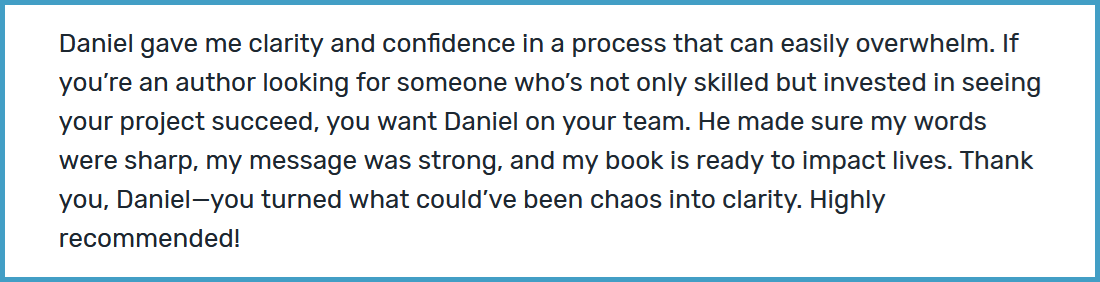
Reviews from other authors matter. Look for reviews that describe specific improvements or measurable outcomes—for example, clearer structure, stronger argumentation, or a faster path to publication—because those details tell you what the editor actually delivered, not just how liked they were.
Pay attention to comments that describe the working relationship: responsiveness, clarity of feedback, tone, and how the editor handled revisions. Those remarks give you a realistic sense of what it will be like to collaborate day to day.
Also weigh the quantity of reviews. More of the same glowing praise should be a green flag.
Watch for red flags too—repeated notes about missed deadlines, poor communication, or scope creep are worth taking seriously.
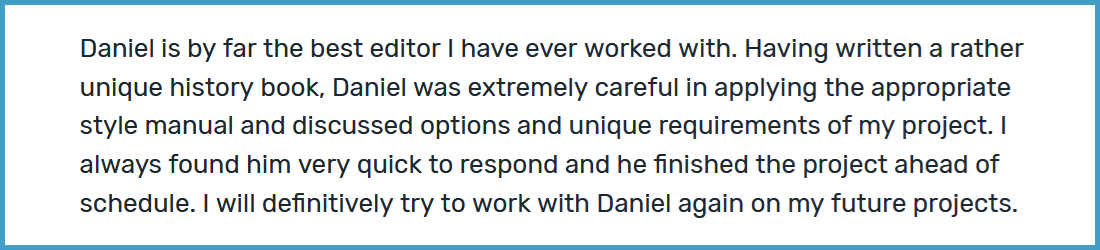
When a review flatters the editor in ways you’d like to claim for your own book (“transformed my manuscript,” “helped me land a publisher,” or “made complex ideas accessible”, “truly cared about my book”), mark it in your plus column. Those are the outcomes you can reasonably expect.
Here are some reviews from my Reedsy profile.
4. A quality sample edit
Always get a sample edit before committing to a full project. A sample shows how an editor handles your voice, the quality of their changes, and how they communicate feedback. It’s the single best way to judge fit before you invest in a full project.
Many top editors will offer a sample edit if they’re genuinely interested. Some provide one free; others charge. In my opinion, it’s a green flag if they offer to do it—for free—without being asked. A useful free sample is about 2,000 words. That length is typically enough to demonstrate meaningful changes without committing to the full project.
If possible, compare samples from one editor to the next.
The most revealing samples show the original text alongside the edited version and include comments, explanations, or revision notes. (Edits are most commonly made in a Word document or DOCX file or in Google Docs.)
Good edits improve clarity and structure while offering actionable, respectful guidance. Strong editors preserve the author’s voice.
Make sure the sample edit matches your manuscript’s needs. For memoir, prioritize sensitivity to voice and pacing.
Ensure the editor’s stylistic preferences and editorial philosophy match your goals.
If you’re looking for developmental editing, samples should annotate structural problems such as weak chapter openings, unclear thesis progression, pacing problems, or redundant sections. Look for suggested strategies, not just line changes.
If you’re looking for copy editing, samples should demonstrate consistent grammar, punctuation, and style choices.
A well‑chosen sample edit will give you confidence in the editor’s skill, approach, and compatibility with your manuscript.
5. Excellent communication
Reedsy professionals are required to reply to a request within two business days. Responses may include questions, a quote, or a decline (with or without explanation).
When you receive a message or quote, check that it’s clear, professional, and engaged. Look for prompt answers to your questions and a readiness to clarify scope, turnaround, and fees so you avoid surprises later.
Treat vague or tardy replies, evasiveness about process, and brusque or overly pushy messages as red flags; they often indicate a poor fit.
6. An easy-to-understand quote
When you receive a quote from a Reedsy professional, be sure it clearly and concisely spells out:
Services provided: What type of editing will be done?
Deliverables: What file(s) will you be receiving from the editor, and how will the feedback or corrections be transmitted?
Timeline and milestones: While some editors will be available to start right away, it’s not uncommon for editors to book weeks or even months in advance and to require a small deposit to reserve your slot, but the timeline must work for you.
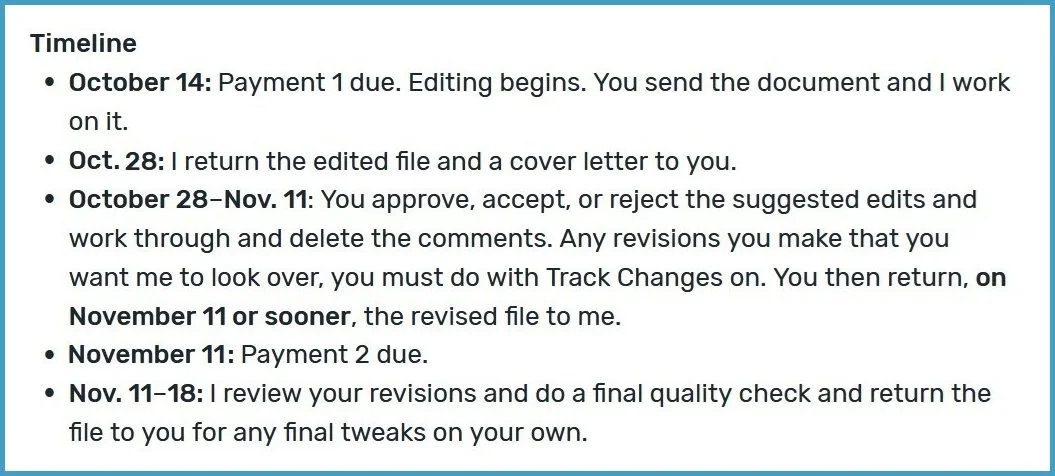
Rounds of edits and/or revisions: Make sure this is clear.
Rate or fee: Most editors charge by the word; some charge by the hour or by the page.
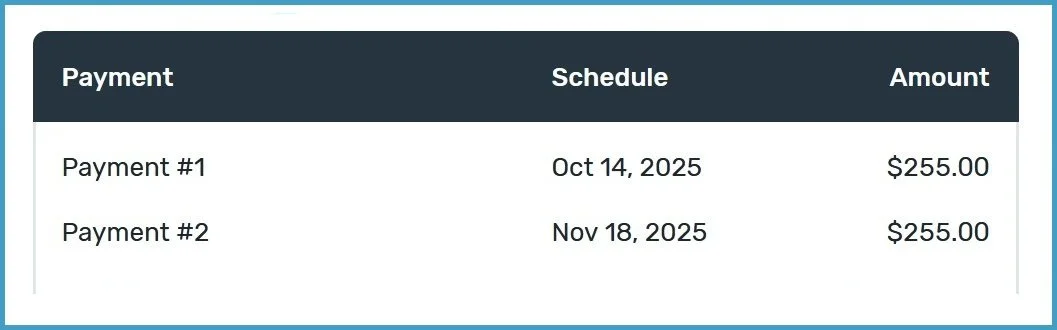
Payment schedule: A massive upfront payment may be off-putting or burdensome, if not a red flag.
Quotes may differ from one freelancer to the next. Feel free to compare, but don’t let price alone be the deciding factor.
A clear quote that covers these points prevents misunderstandings and protects both parties. If anything seems unclear, ask questions before you accept.
7. Reasonable pricing and payment terms
Familiarize yourself with the current average editing rates on Reedsy. Weigh those with the other factors I’ve described.
See How Much Does a Reedsy Editor Cost? on the Reedsy Blog.
Confirm payment terms up front: deposit, milestone payments, full payment upfront, or final payment on delivery.
There is no “typical” way Reedsy professionals handle this. If cost is a concern, you might ask to spread out the payments, do fewer revision rounds, or change up the timeline.
8. Extra work quoted in advance
Ask how additional work will be priced, such as extra rounds, new chapters, or major rewrites.
If you think you may need additional services the editor offers, ask about that too.
Because you can rehire an editor—and it’s possible to amend a contract by mutual agreement—don’t feel you have to expand the quote at this stage.
Hiring an editor on Reedsy: A checklist
Visit Reedsy Marketplace, shortlist up to five vetted editors, and request quotes today—then use this checklist to hire with confidence and get your book sprinting to the bookshelf.
Specialization: Confirm the editor explicitly lists the service, genre/subgenre, and language you need. Ask for examples of similar projects they’ve completed.
Profile fit: Read the editor’s profile for relevant experience, tone, and working philosophy. Make sure their approach and temperament match how you like to collaborate.
Good reviews: Look for reviews that describe concrete results (structure, clarity, support) and what it’s like to work with the editor. Watch for recurring complaints or warning signs.
A quality sample edit: Request a sample edit (about 2,000 words is ideal) and prefer before‑and‑after examples with comments or revision notes. Check that the editor preserves your voice and gives clear, actionable feedback.
Excellent communication: Verify responses are prompt, clear, and professional. Confirm typical response times and that the editor will clarify scope, timeline, and fees when needed.
An easy-to-understand quote: Get a written quote that itemizes services, deliverables, word count, number of revision rounds, timeline or milestones, rate, and payment schedule.
Reasonable pricing and payment terms: Make sure you understand how the fee is calculated and when payments are due relative to the project timeline. Compare quotes but avoid choosing solely on price.
Extra work quoted in advance: Define how additional work will be priced and approved (hourly, per word). Include this process in the contract if you might need it later, without feeling obliged to accept extras now.
Conclusion: Choosing a Reedsy editor
Choosing an editor on Reedsy is a strategic decision that affects your book’s clarity, credibility, and market success.
With the right editor, your nonfiction manuscript will not only read better but will be positioned to reach the readers and gatekeepers who matter most.
Following these guidelines will reduce surprises, protect your manuscript, and help you choose an editor who’s not only skilled but also a reliable collaborator.
For further reading related to the Reedsy Marketplace:
Reedsy Author FAQ: Sending Requests (Reedsy Marketplace)
Reedsy Author FAQ: Collaborations (Reedsy Marketplace)
Reedsy Author FAQ: Payments (Reedsy Marketplace)
The Different Types of Book Editing (by Daniel J. Tortora)
How Much Does a Reedsy Editor Cost? (Reedsy Blog)
Become a Reedsy Freelancer (minimum 3 years’ publishing industry experience and must prove you’ve worked on at least 5+ highly rated published books)